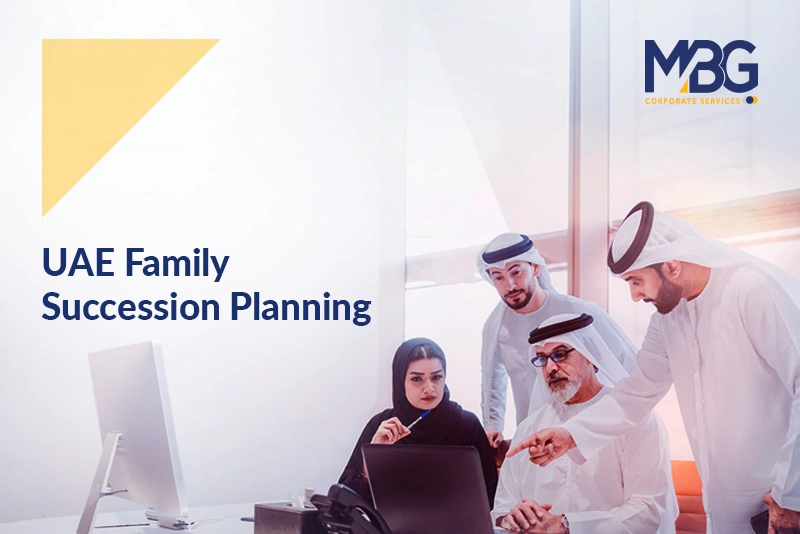
Succession planning is critical for UAE family businesses to ensure continuity, stability and harmony across generations. Family-owned businesses form the backbone of the UAE economy, contributing significantly to GDP and employment while shaping the country’s entrepreneurial landscape. Estimates suggest that family businesses account for nearly 80% of the private sector in the UAE, underscoring their economic and social importance.
By proactively mapping assets, legal structures and family roles, owners can avoid fragmentation of ownership, deadlocks or unintended heirs receiving shares. Recent UAE reforms, notably the Federal Decree-Law No. 37/2022 on Family Businesses (“
Family Business Law”) and updates to the Companies Law, provide new options (share classes, buy-sell rights, drag-along/tag-along provisions) that support orderly transitions. Non-Muslim families can now register wills in DIFC, ADGM or local registries to override default Sharia rules. Implementing a plan requires clear governance (family constitutions, shareholder agreements, boards and councils), regular review and cultural sensitivity. This article explains the UAE legal landscape for succession, surveys key tools and challenges and mechanisms to overcome these challenges.
Understanding Succession Planning
Succession planning refers to the structured process of transferring leadership, ownership, and control of a business to the next generation or identified successors. It goes beyond simply appointing a successor and involves governance frameworks, asset protection, and long-term
business continuity planning.
In the UAE context, succession planning must also take into account local legal frameworks, inheritance laws, and regulatory developments, making it a multidisciplinary exercise involving legal, financial, and governance considerations.
UAE Legal and Regulatory Framework
- Federal Laws: The UAE’s Personal Status Law (Federal Decree-Law No. 41 of 2024) distinguishes Muslims vs non-Muslims in inheritance. Muslim estates default to Sharia-based fixed shares, with only one-third freely disposable by will. Non-Muslims, however, fall under a separate civil regime: they may apply either the UAE’s personal status provisions or the inheritance law of their nationality. In practice, this means expatriates can often have their home country’s succession rules respected, but only if they expressly invoke them via properly registered documents.
- Family Business Law: This creates an “opt-in” register and governance framework for families owning private companies, trusts, foundations or waqf. Registered businesses can write special provisions into their governing documents, e.g. classes of shares, pre-emption rights, buy-back on death or bankruptcy. Registered families may also adopt a legally binding family charter/constitution to govern family affairs.
- DIFC ADGM Regimes: Both DIFC and ADGM allow non-Muslim will registration covering UAE assets. The DIFC Courts’ Wills Service issues specialized wills (for property, businesses, guardianship, etc.) under familiar laws. ADGM’s Notary & Wills Office similarly notarizes bilingual wills (required by law) that exclude Sharia. Both free zones also have foundations and trust legislation. Trusts separate legal title (held by trustees) from beneficial interests, making them powerful succession vessels. Foundations serve a similar purpose but are more familiar to civil-law families. ADGM foundations can also be used for family wealth.
Corporate and Family Governance
Effective succession goes hand-in-hand with strong governance. Family businesses should review their articles of association/shareholder agreements in light of new rules. Many families implement a family constitution or charter, a document (sometimes legally binding) that spells out family values, roles, dividend policies and conflict-resolution mechanisms. While not a substitute for law, a constitution guides interpretation of formal agreements. Larger families often create a family council and tiered structure: for example, an official board of directors (including some independent members), a family council (with representatives of each branch) and committees. This architecture separates daily management from ownership oversight, giving non-active heirs input without disrupting operations.
Succession planning is proven to be more efficient and impactful when implemented proactively rather than reactively. On the occurrence of any trigger event, families are more likely to be dealing with personal pressures, expectations and, in some cases, a mismatch between legal ownership and family intentions, especially where the asset base is diverse. Accordingly, a coordinated review of the assets, the ownership structure and the existing documentation, with a view to identifying any gaps, inconsistencies or structural weaknesses, is usually required.
Tax and Estate Considerations
The UAE imposes no inheritance, estate, gift, or personal income tax. However, assets held by family offices or trusts are generally taxable entities by default, but the law allows a family foundation to apply for tax transparency so that income is treated as if earned by individuals (and thus exempt). Families should also consider any foreign tax implications of succession (for assets abroad). For residents owning companies overseas, tax treaties and dual-residence rules may assign jurisdiction. For example, British heirs might face UK inheritance tax on global assets.
Succession can create liquidity needs: if heirs wish to inherit a business, the family must ensure funds are available to pay taxes, satisfy debts or buy out other members. Otherwise, a forced sale could be needed. Thus, maintaining personal or family insurance/pension funds and contingency cash for estate settlement is prudent (though UAE has no direct estate tax, related parties may have capital gains or stamp duties on transfers). In sum, while the UAE’s lack of transfer taxes is a plus, careful tax-efficient structuring (using holding companies, foundations and free-zone vehicles) maximizes after-tax wealth for heirs.
Succession Planning Tools and Mechanisms
- Wills: For onshore assets, both Muslim and non-Muslim individuals can make wills. Muslim wills cannot override Sharia shares beyond the permissible limit, so many Muslim owners simply arrange gifts (hiba) or family contracts instead. Non-Muslims are encouraged to register wills via DIFC Courts, ADGM Notary or local registries. DIFC and ADGM wills allow virtually any distribution (with spouses and children treated equally) and apply English common law principles, offering certainty for expat families. Crucially, local onshore registries cover all UAE assets (and even allows bequests of overseas assets). These registered wills mitigate the risk of default intestacy and make probate smoother.
- Trusts: UAE trust law (Federal Decree-Law No. 31/2023) and laws governing trusts in ADGM/DIFC allow express trusts for succession. A trust ensures continuity of ownership and administration beyond the lifetime of the settlor, enabling assets to be distributed in line with the settlor’s wishes. In practice, a settlor can fund a trust with family shares or assets, appoint a professional trustee, and set flexible or discretionary terms. Trusts are particularly useful for managing assets of multi-generational families, providing confidentiality and asset-protection.
- Family Foundations/Waqf: The DIFC and ADGM each allow family foundations. Legally similar to a company, a foundation holds assets in its own name under a charter. Unlike trusts, foundations have legal personality and perpetual succession. The founder or guardians can reserve powers to ensure family oversight. Foundations are particularly appealing to Muslim families, as they can be structured as a waqf (a charitable trust) if desired, although many are used privately.
- Family Council and Constitution: These non-legal tools are equally crucial. A family council (of senior family members) meets regularly to educate the next generation, arbitrate disputes informally, and uphold shared values. A family constitution/charter, often drafted with legal counsel, records the family’s mission, values, criteria for joining the business, dividend policies and conflict resolution steps. A constitution lends moral weight and can guide the interpretation of binding instruments. Formalizing it (e.g. notarizing or embedding it in a trust framework) adds credibility.
Crucial and Practical Challenges
UAE family businesses exhibit diversity in culture and size. Emirati families often emphasize unity and honor, with decisions traditionally guided by elders. However, demographic shifts mean more daughters and grandchildren are educated abroad, sometimes expecting equality. Some families use gifts or structures (e.g. a father could gift a portion of shares before death to mitigate this disparity). Expatriate families may have their own traditions and often place a higher trust in formal contracts than traditional norms. They may struggle with UAE rules on inheritance or the absence of community property regimes.
Common obstacles include reluctance to discuss death, which delays planning until it’s urgent (“trigger event” issues). Young or second-generation family members may underestimate conflicts, while founding patriarchs might fear loss of control. Language can also be a barrier: legal documents must often be bilingual in Arabic and English, which adds cost and complexity (ADGM wills, for example, require certified Arabic translation).
Best Practices and Implementation Timeline
Succession planning should be proactive, collaborative and iterative. A clear roadmap might include:
- Map the asset base and ownership structure - list all business entities, family offices, real estate, financial accounts and their jurisdictions including offshore holdings.
- Define family objectives - clarify priorities: control vs liquidity, equal vs merit-based inheritance, etc. Align family branches on a common vision (documented in a family charter).
- Draft and register instruments - Prepare wills (DIFC or ADGM) that accurately reflect the desired distribution. Draft or amend constitutional documents: family constitution, shareholder agreements, board charters. If using trusts or foundations, establish them and effect asset transfers (ensuring compliance with Waqf/ADGM regulations). For onshore companies, consider formal notification of nominee shareholders or family structure (e.g. register under family business law).
- Implement governance structures - constitute the board, family council, and define officers/executives for each business. Formalize decision-making protocols (e.g. “require X% vote to hire next CEO, Y% to declare dividends”). Set up meeting schedules and reporting.
- Communicate and train - Hold family meetings to explain the plan and rationale. Provide next-gen members with training and mentoring in finance/management. Transparency builds trust and reduces rumors.
- Review periodically - Succession planning is not one-off. Schedule annual reviews or trigger-based updates (births, marriages, deaths, major business changes).
Conclusion
Succession planning is a cornerstone of sustainability for family businesses in the UAE. As the country continues to strengthen its regulatory framework and position itself as a global business hub, the need for structured and proactive succession strategies has never been greater.
For family-owned enterprises, the question is no longer whether to plan for succession, but when. Early and well-considered planning not only safeguards business continuity but also ensures that family legacies endure across generations.




 122
122  112
112  109
109